BEFORE THE 17TH C.
An earlier construction
The present palace was raised over an earlier building whose form remains unknown.
OFFICIAL HERITAGE SOURCE
HERITAGE CAPSULE 002
CAMBADOS · O SALNÉS · GALICIA
The house remained.Its name began to travel.
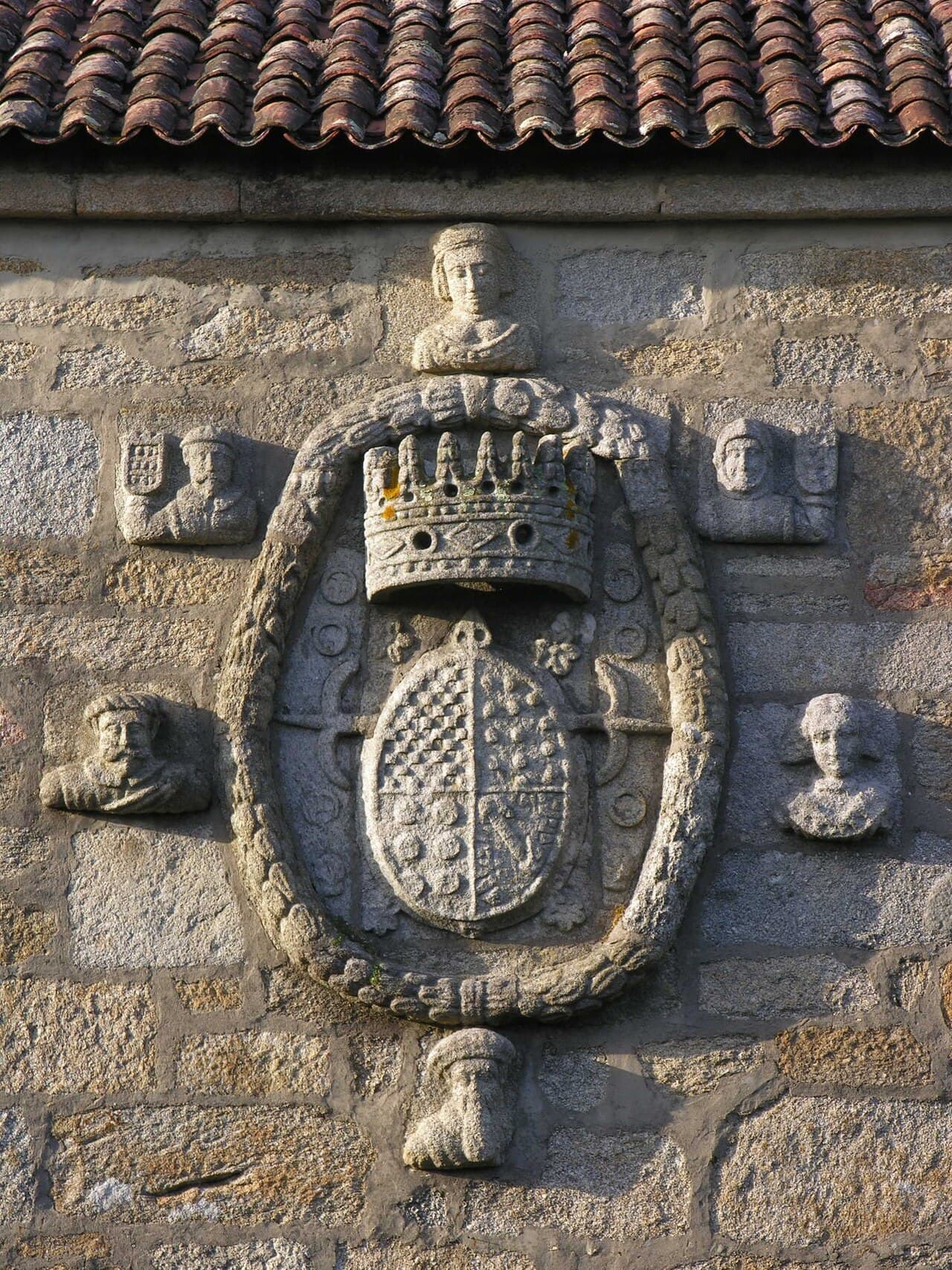
PHOTO · JCNAZZA · CC BY 3.0 · COLOUR ADJUSTED
SCROLL · STONE BECOMES A NAME
00 / OPENING
This one did not.
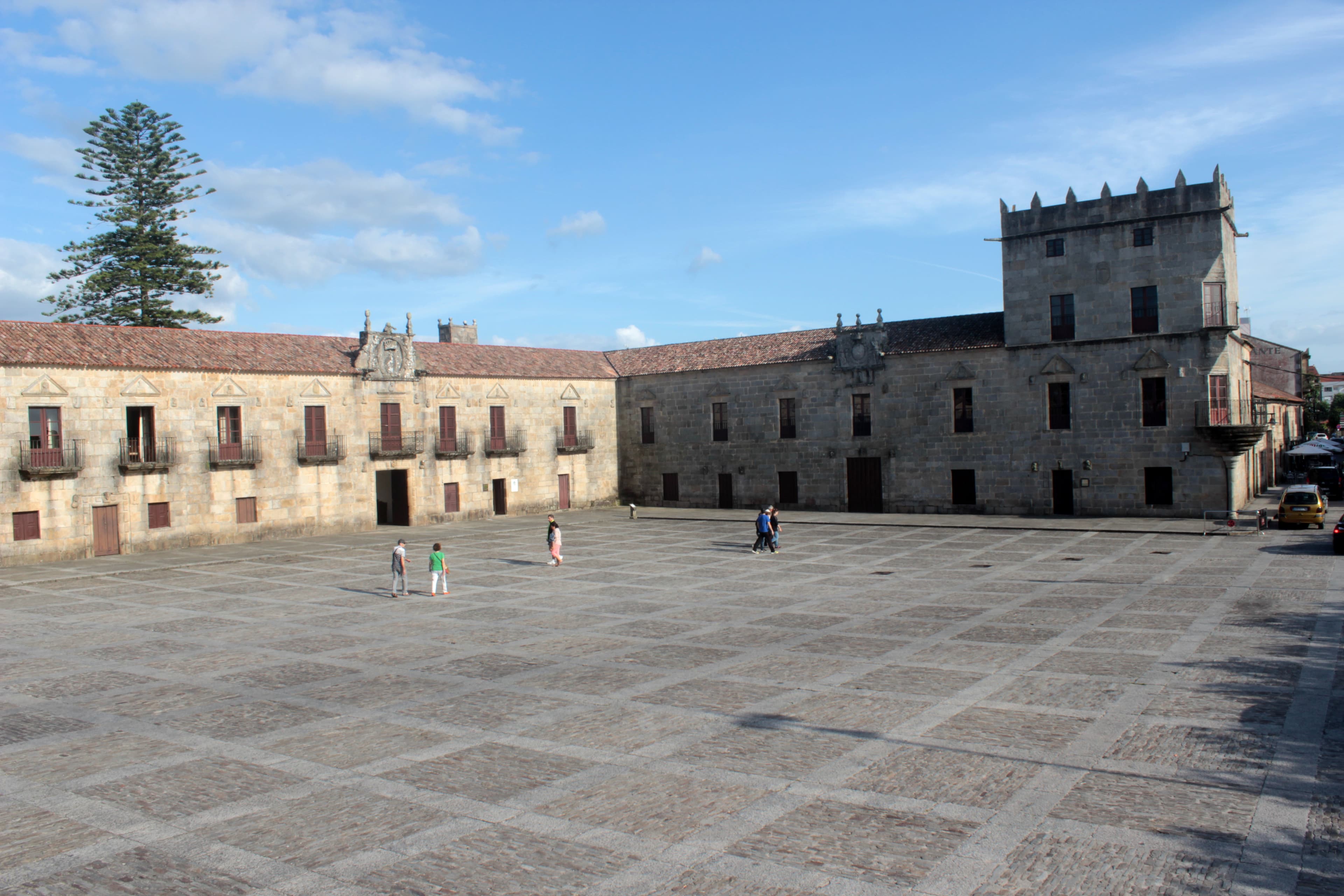
Behind the long granite façade of Fefiñanes, residence, work and wine continued to occupy the same protected structure.
The building remained in Cambados. Its name began to move through bottles, markets and memory.
This is not a story of unchanged tradition.
It is a story of a place learning how to continue.
FILM / HERITAGE CAPSULE 002
Architecture, evidence and commercial continuity — composed as a 78-second heritage film.

01 / BEFORE THE LABEL
HOUSE · SQUARE · POWER
Raised over an earlier construction, the surviving complex belongs principally to the opening years of the seventeenth century.
Its long body, circular balconies, bridge, church and open square formed a public composition: architecture as residence, lineage and urban order.
02 / THE WORK BELOW
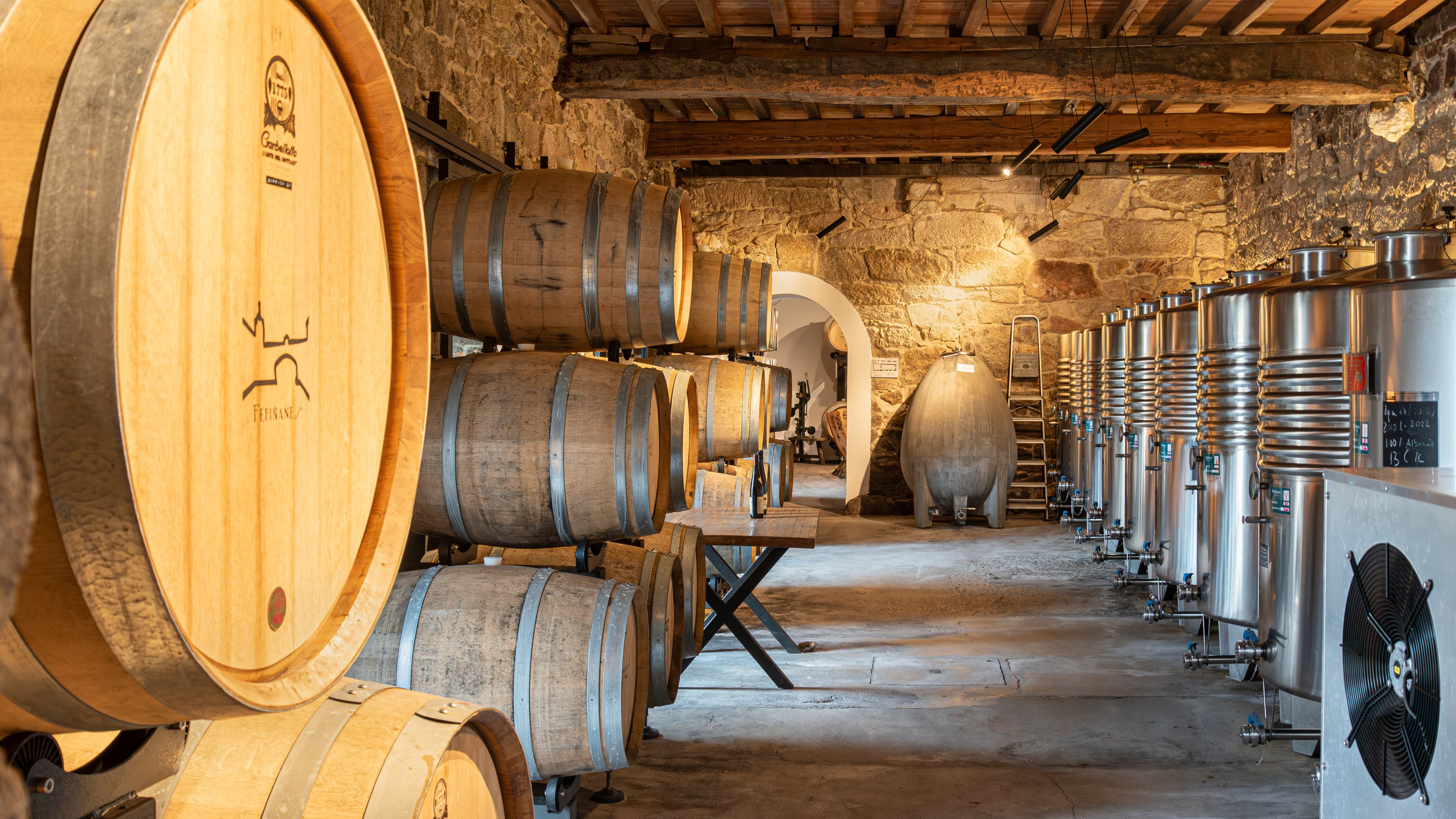
The protected monument contains a simple vertical relationship: residence above, wine production and trade below.
Heritage, here, is not the absence of use.
It is the discipline of continuing.
03 / WINE BEFORE THE WINERY
The winery records a relationship between the palace and wine reaching back to the seventeenth century.
That statement belongs to institutional memory. It does not prove one uninterrupted commercial company.
Scientific evidence distinguishes Albariño from varieties with which it was once confused and identifies an 1843 description as the earliest located in the study’s historical review.
The familiar Rhine-monastery origin story is not used here as fact.
04 / 1904
FROM INHERITED PRACTICE TO ENTERPRISE
Regional tourism records identify 1904 as the beginning of the commercial winery in the palace. The date does not begin the relationship between house and wine. It changes its structure.
PHOTO · JORGE FRANGANILLO · CC BY 4.0 · COLOUR ADJUSTED
05 / NAMING THE WINE
The winery records the first vintage of Albariño de Fefiñanes and identifies Enrique Mayer as the designer of its label.
A name tied the product to the palace. A label made that relationship repeatable.
THE ARCHITECTURE STAYED IN THE SQUARE.
THE NAME COULD NOW CROSS A BORDER.
06 / TIME
BEFORE THE 17TH C.
The present palace was raised over an earlier building whose form remains unknown.
OFFICIAL HERITAGE SOURCE
EARLY 17TH C.
The principal fabric visible today belongs to the opening years of the seventeenth century.
OFFICIAL HERITAGE SOURCE
17TH C.
The winery records a relationship between the palace and wine; uninterrupted commercial operation is not assumed.
ATTRIBUTED INSTITUTIONAL RECORD
1843
The earliest description located by a 2007 peer-reviewed scientific study.
PEER-REVIEWED SOURCE
1904
Regional tourism records identify the beginning of the winery operating in the palace.
OFFICIAL TOURISM RECORD
1928
First vintage of Albariño de Fefiñanes; Enrique Mayer is identified as label designer.
INSTITUTIONAL RECORD
1980 / 1988
The Albariño denomination is established and later becomes D.O. Rías Baixas.
SECTOR INSTITUTIONAL SOURCE
2012
The BIC decree records both monument value and the continuing winery use of the ground floor.
OFFICIAL PRIMARY SOURCE
TODAY
Residence, working wineries and reserved visitor experiences continue within the protected ensemble.
CURRENT VERIFIED USE
07 / 2012
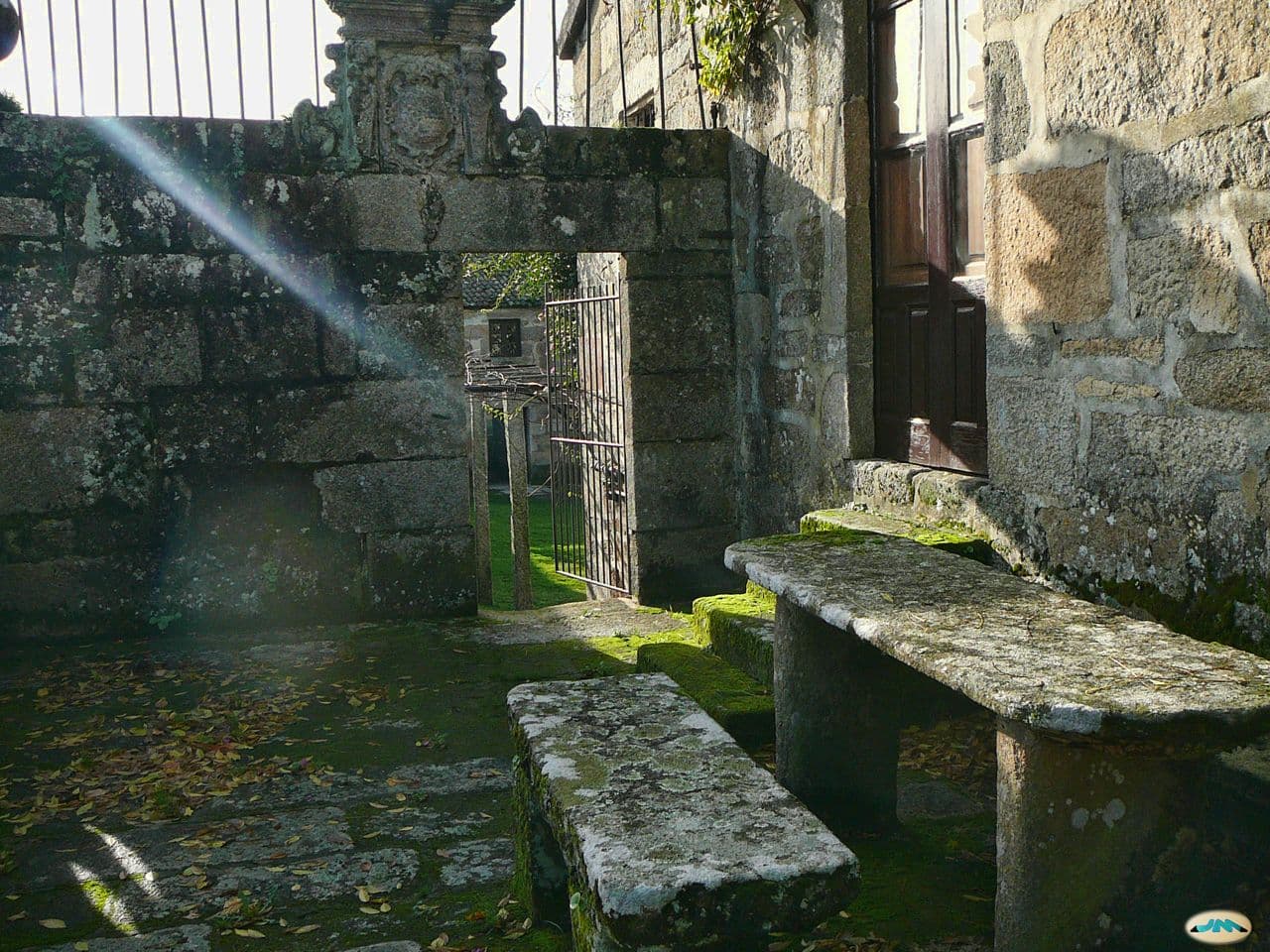
The final BIC declaration recognised the palace’s architectural and historic value. It also recorded winery use on the ground floor and found existing uses compatible with the monument when appropriately managed.
Protection did not require the building to stop working.READ THE OFFICIAL DECREE ↗
08 / THE LIVING ASSET
Historic rooms remain connected to contemporary wine production.
Reserved visits and tastings turn process and place into understanding.
A name carries the palace into markets, hospitality and cultural memory.
Verified text, imagery and film continue across press, trade, education and campaigns.
The palace currently contains two distinct wineries. This capsule centres on Bodegas del Palacio de Fefiñanes; their histories and operations are not merged.
09 / EVIDENCE ARCHIVE
Every major claim is assigned a source class, evidence grade, rights status and publication state.
Defines the protected monument, its significance, uses and boundaries.
OFFICIAL PRIMARY SOURCE
Records the transition from inherited wine culture to structured enterprise.
OFFICIAL TOURISM RECORD
Documents the first vintage and identifies Enrique Mayer as label designer.
FIRST-PARTY INSTITUTIONAL
Separates Albariño from Savagnin Blanc and Caíño Blanco through molecular and ampelographic study.
PEER-REVIEWED SCIENCE
Prevents the two present businesses inside the palace from being merged into one history.
CURRENT OFFICIAL SOURCE
The milestone may be discussed; image reproduction remains on hold pending rights review.
RIGHTS REVIEW REQUIRED
10 / SOURCE FRAMEWORK
Official records establish legal and architectural facts. Scholarly and scientific work supports interpretation. Institutional sources describe their own history and present offer. Rights are assessed separately from factual relevance.